Solar module
- Rated / type
- 100 W · monocrystalline silicon
- Module voltage
- 18 V
- Build / protection
- Tempered glass + aluminum frame · module IP67
- Tilt
- Adjustable up to 35°
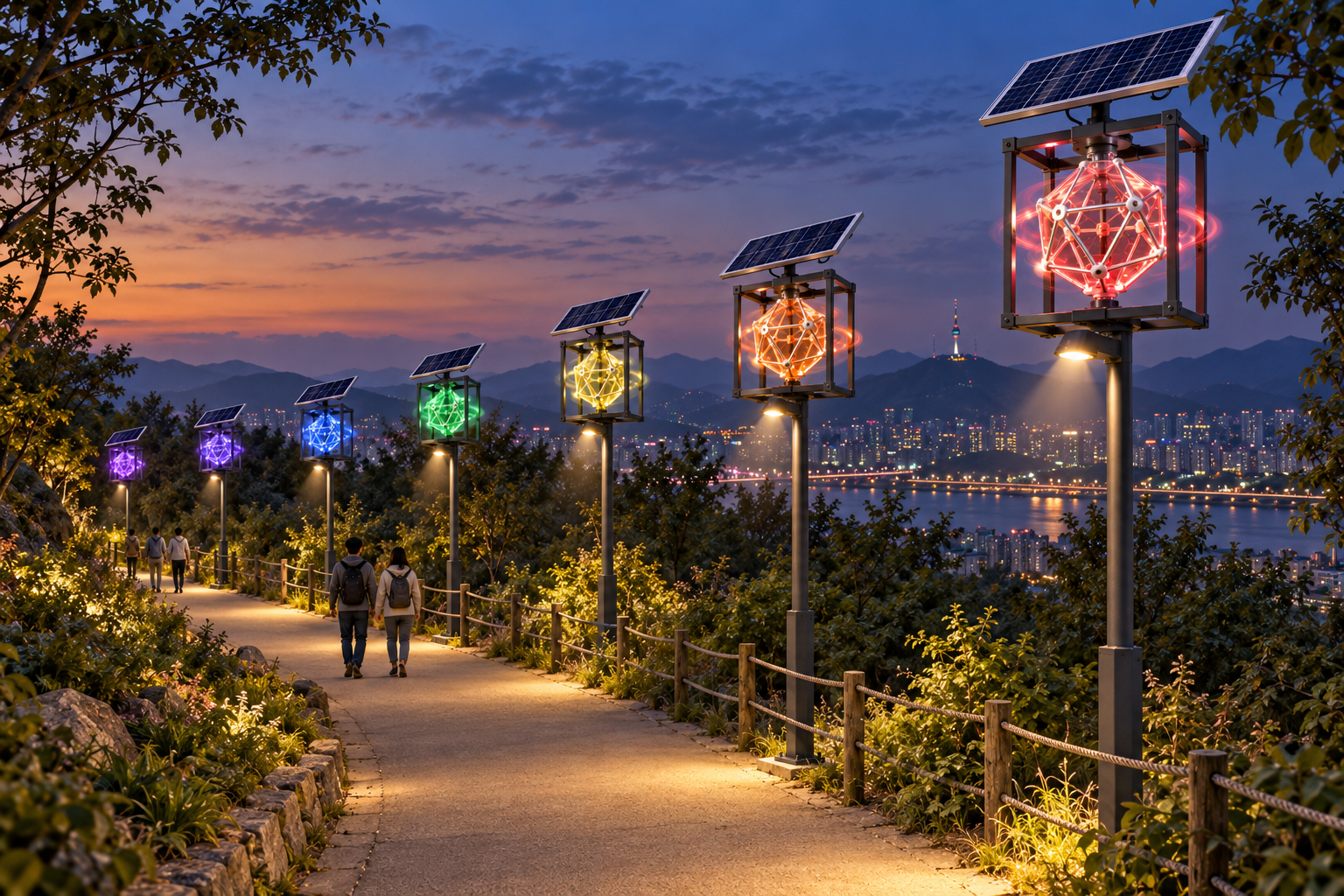
HYBRID · LANDSCAPE LIGHTING
A 3.5 m landscape light combining a diamond-shaped vertical-axis turbine with solar power. Designed to light walking paths and create a memorable nightscape.
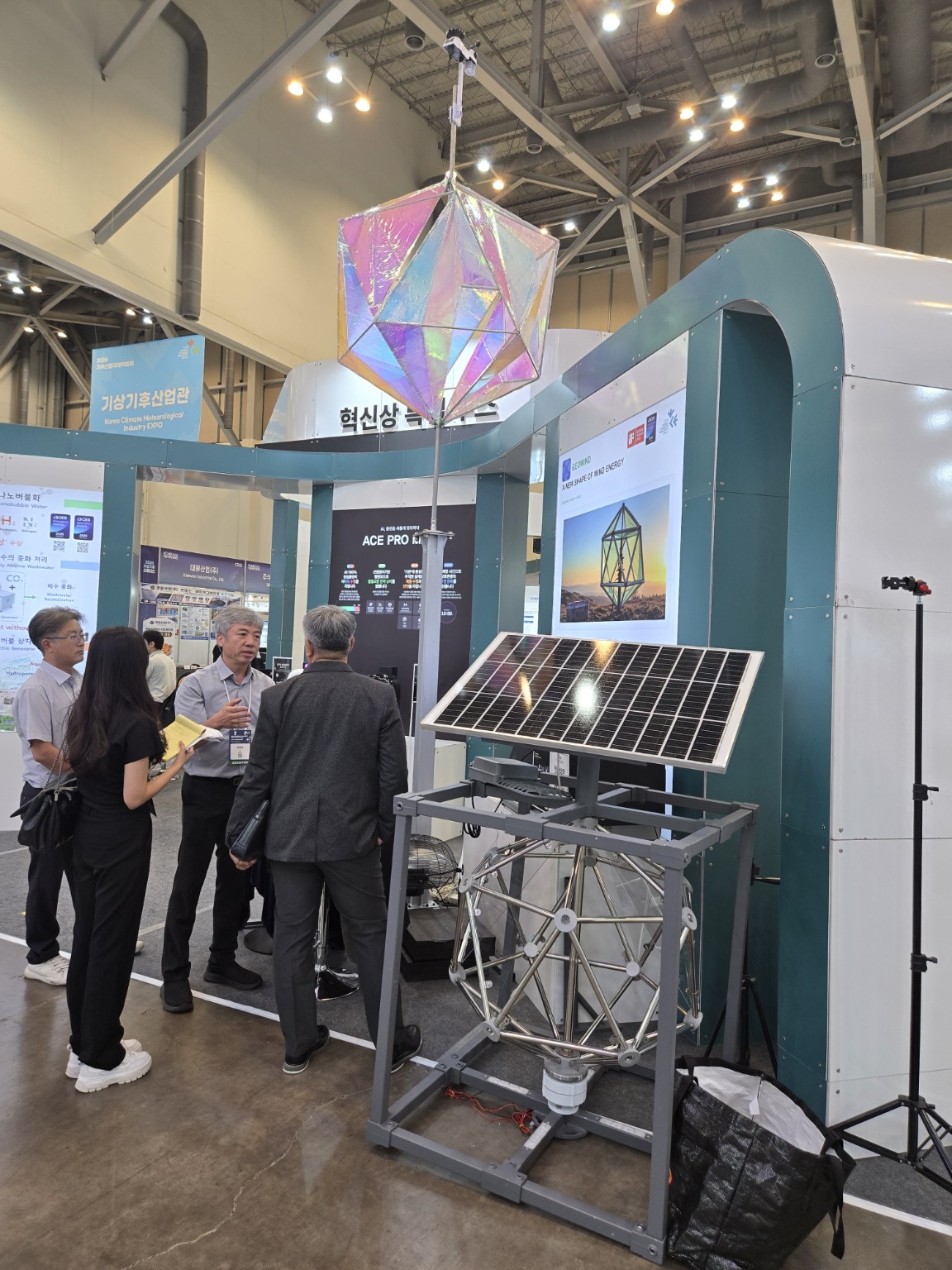
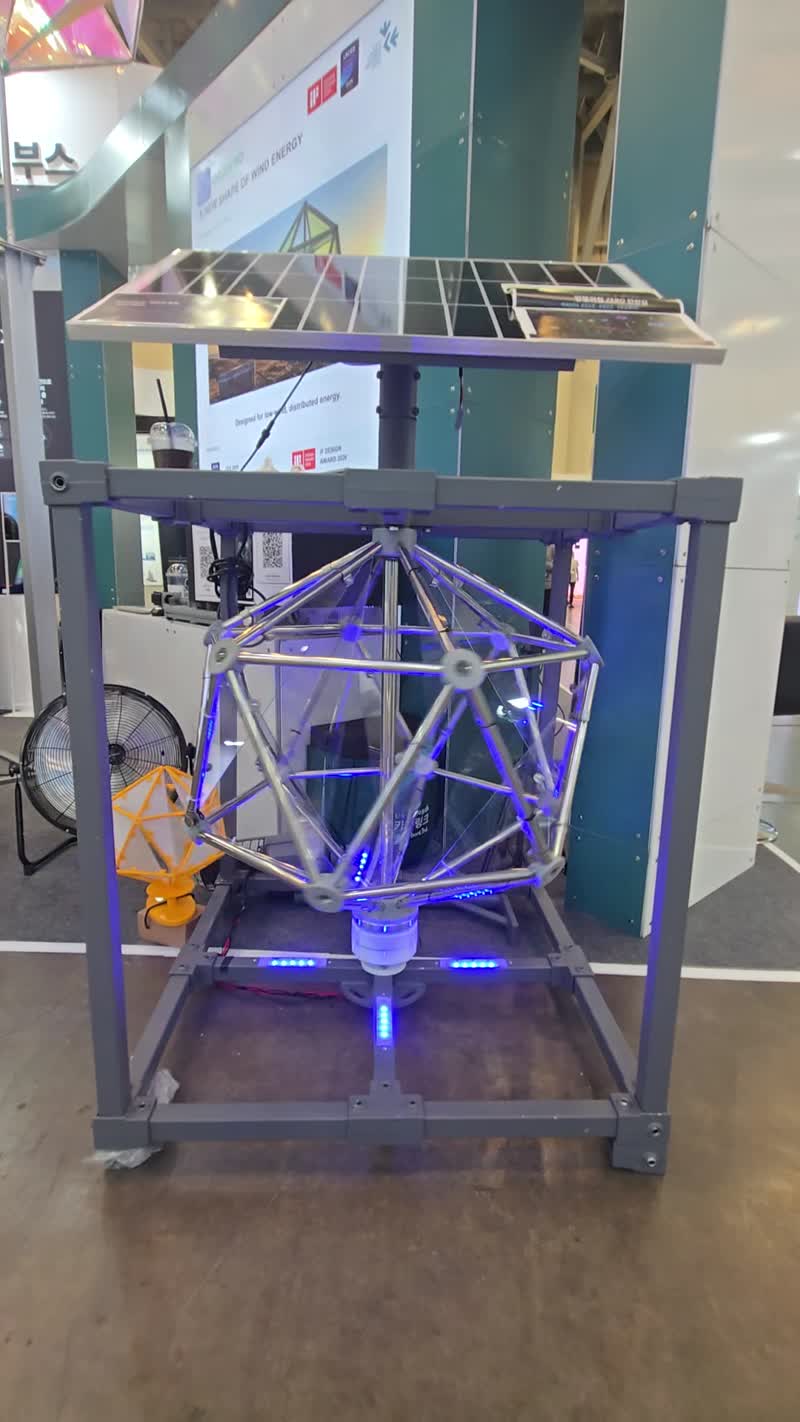
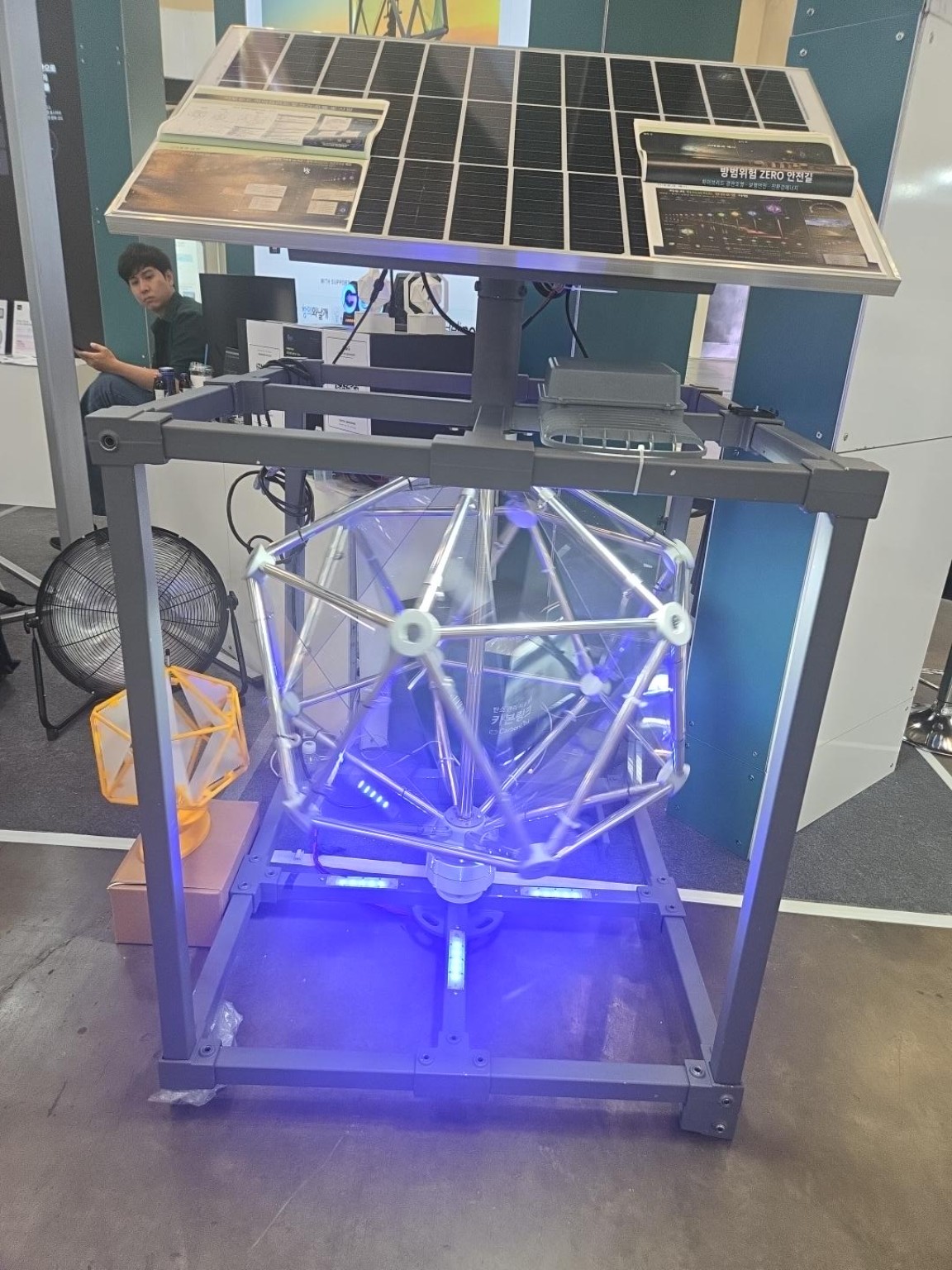 Actual exhibition prototype · reference for proposed 60 cm model
The actual exhibition prototype shows a polyhedral rotor within a protective frame. The supplied 60 cm concept combines a solar panel, turbine, battery and LED on one pole. A photograph alone cannot verify the final components or electrical output.
Rotor diameter options: 35, 45, 60 and 80 cm. The detailed specifications below apply only to the supplied 60 cm concept. Other diameters need their own engineering and measurements for power, start speed and noise.
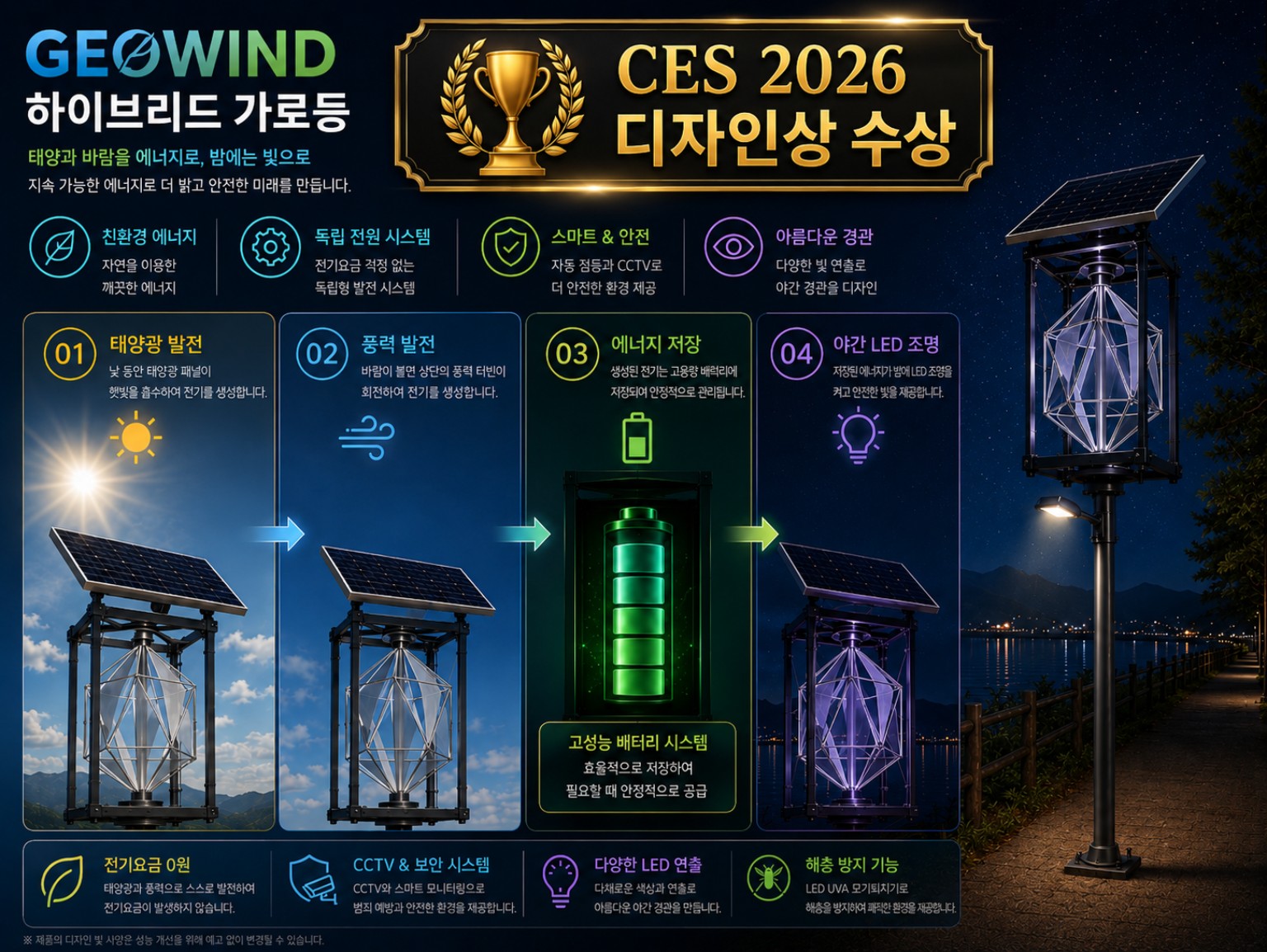
SYSTEM CONCEPT · 60 CM
This supplied concept graphic shows the layout and energy flow. Award text within the graphic is not treated as proof of an award or performance certification for this lighting model.
Explore energy estimates ↗These specifications were supplied for planning. Rated output, rotor start, noise, IP ratings and rainy-day autonomy require final-product tests and on-site validation. Controller design must also confirm charging compatibility among the 12 V generator, 18 V panel and 12.8 V battery.
Move the slider to explore rotor speed, illustrative wind output and LED brightness. In battery-assist mode, wind reduces battery draw while the battery keeps the lamp lit.
Rotor starts at 1.8 m/s · meaningful charging needs measured validation
LED brightnessWind-only demonstration: output directly controls LED brightness.
Rotor turning
Educational simulation only. No measured power curve or rated wind speed was supplied for the 60 cm unit, so the curve arbitrarily assumes 50 W at 10 m/s (200 W is the proposed generator rating). LED load is 50 W; battery-assist mode assumes a charged battery. Conversion and charging losses are excluded. A rotor starting at 1.8 m/s does not prove useful battery charging at that speed. Wind speed and power: U.S. Department of Energy ↗
INTERACTIVE / WIND × ROTOR SIZE
Move the wind slider and select a rotor diameter. An animated 60-second trace shows synthetic wind and illustrative wind output, inspired by the monitoring display in the supplied photo.
The slider sets the baseline wind. Playback adds a small simulated gust to animate the trace.
Proposed 35 · 45 · 60 · 80 cm sizes · detailed specifications only for 60 cm
SIMULATED / NOT MEASURED
Rotation assumed · charging needs measurement
Educational calculation only. As in the existing simulator, the 60 cm rotor is arbitrarily assumed to produce 50 W at 10 m/s, with an assumed 0 W below 1.8 m/s applied to all four sizes. For other sizes, rotor height is assumed to scale with diameter, so intercepted area scales with diameter squared; a 200 W calculation cap is used for all four sizes. The wind trace is generated, not recorded. Rotor start speed does not establish charging start speed, and these values are not measured output, battery charging, or guaranteed product performance. Wind speed and power: U.S. Department of Energy ↗
For trails and campsites, begin with an 8–12 m spacing concept. Final distance depends on path width, trees, local terrain, target illuminance and uniformity.
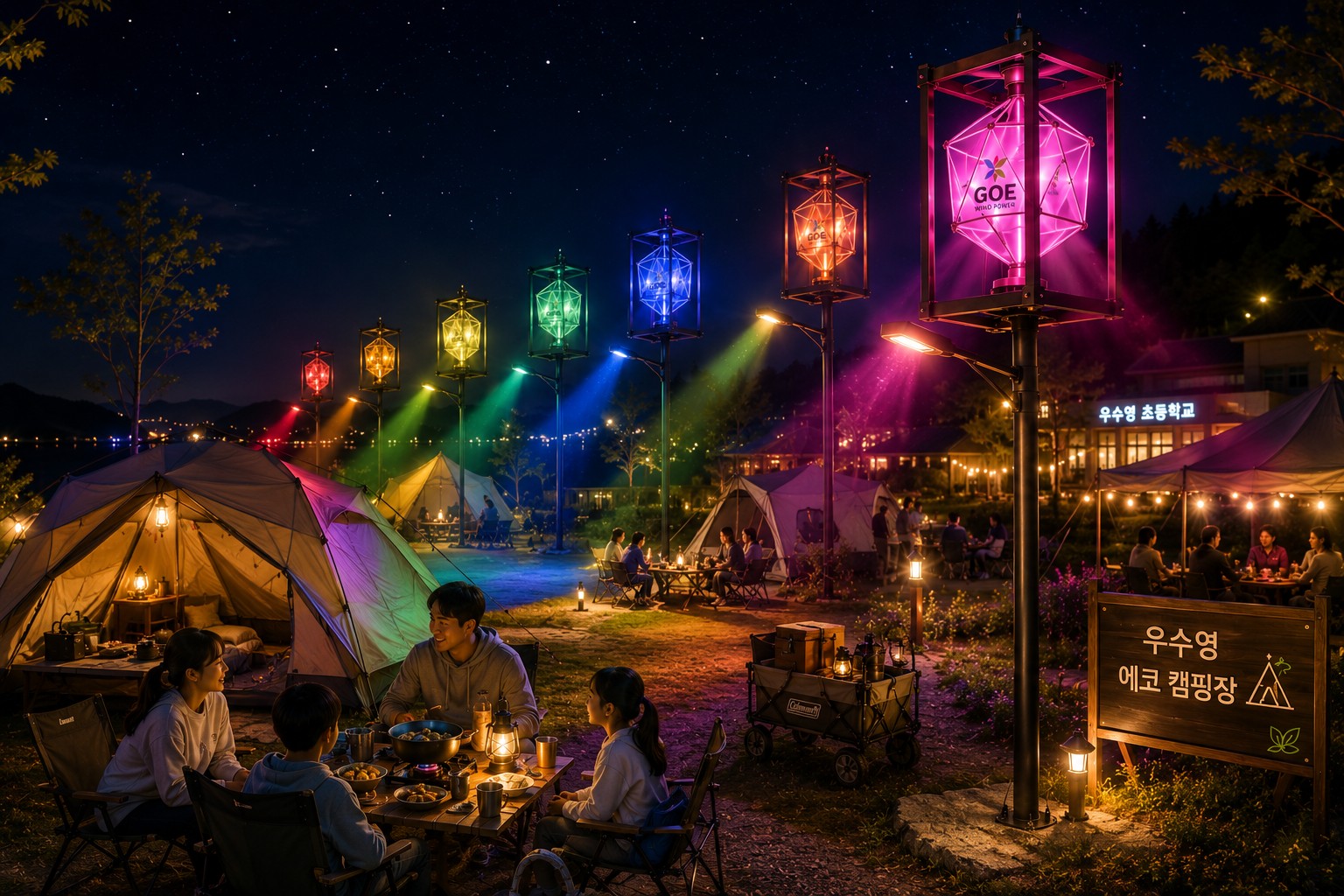
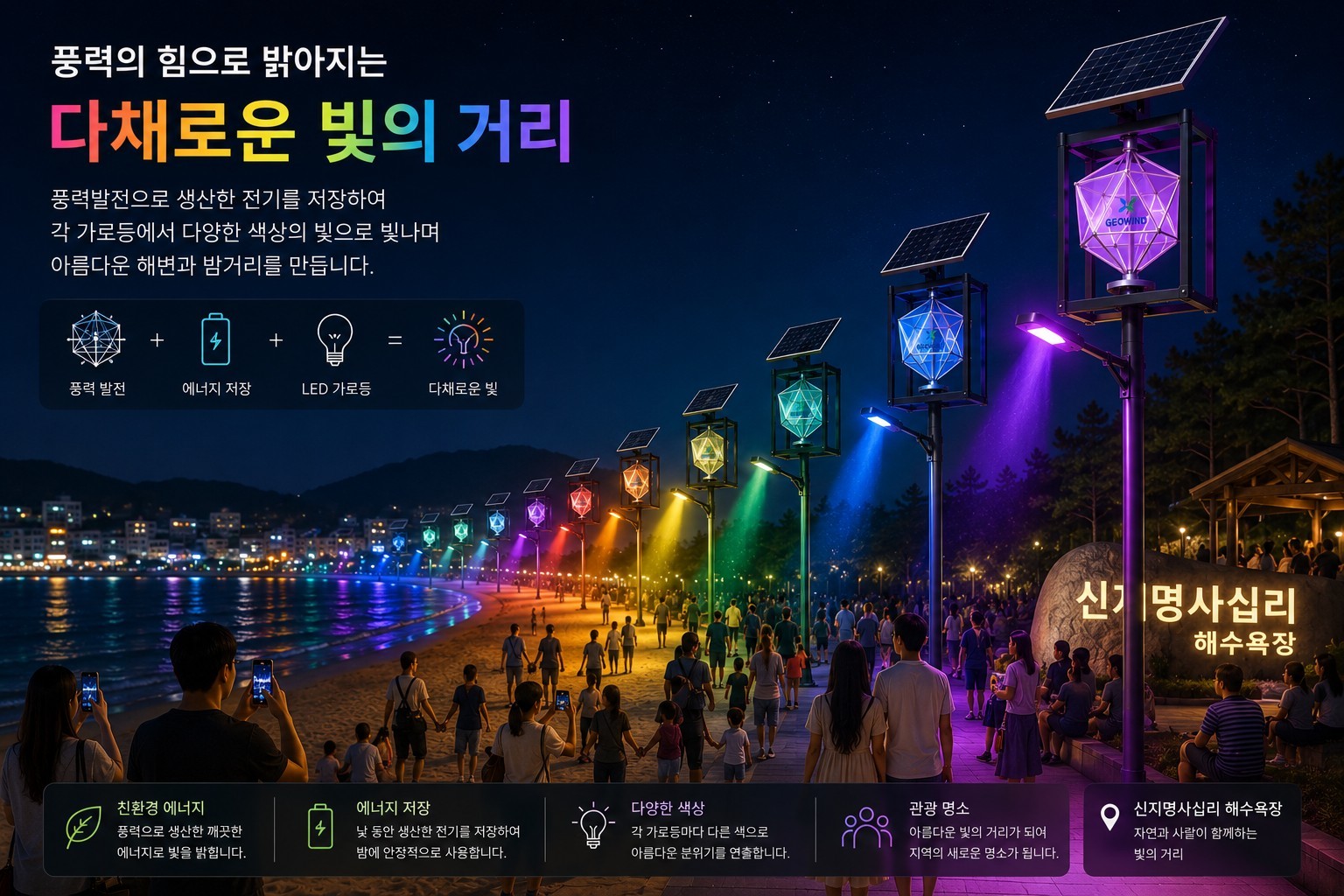
For trails and waterfront walks, we propose layouts that consider color and spacing between lights.
Two supplied concepts combine waterfront lighting with visitors' experience. Project design should consider colors, brightness, safe circulation and spill light near homes.
Real photographs of the solar panel, polyhedral wind rotor and LED prototype shown at BEXCO in 2026. These do not document a finished trail installation or certify the planned 60 cm unit’s electrical performance.
Security and insect-related lighting are optional concepts. Include their added power draw and review installation, safe operation and local requirements before selecting a battery and controller.
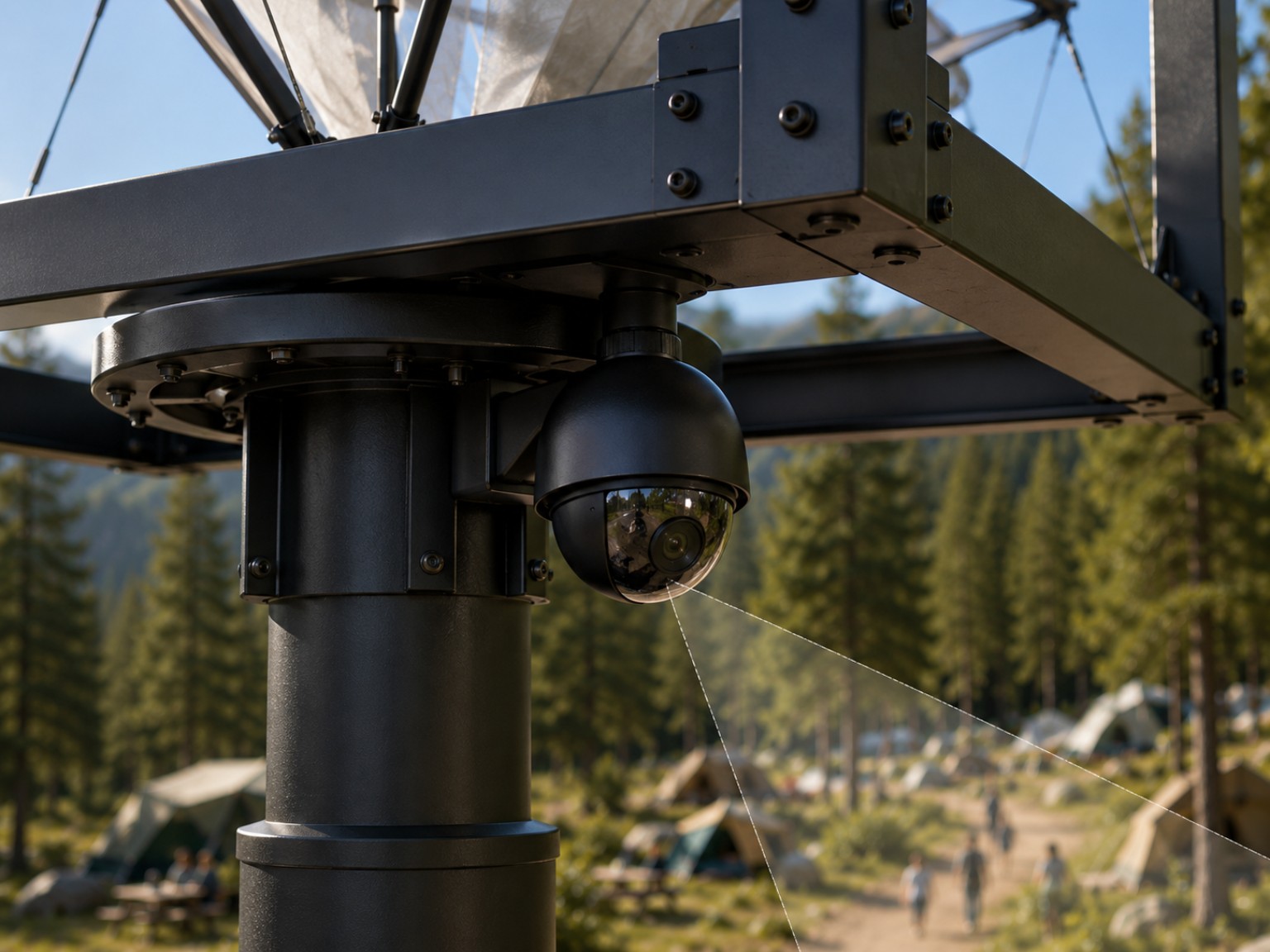
A visual concept for security along paths. Camera, recording and connectivity power needs separate budgeting, with appropriate signage and installation requirements.
Optional equipment concepts · excluded from the base 60 cm specification
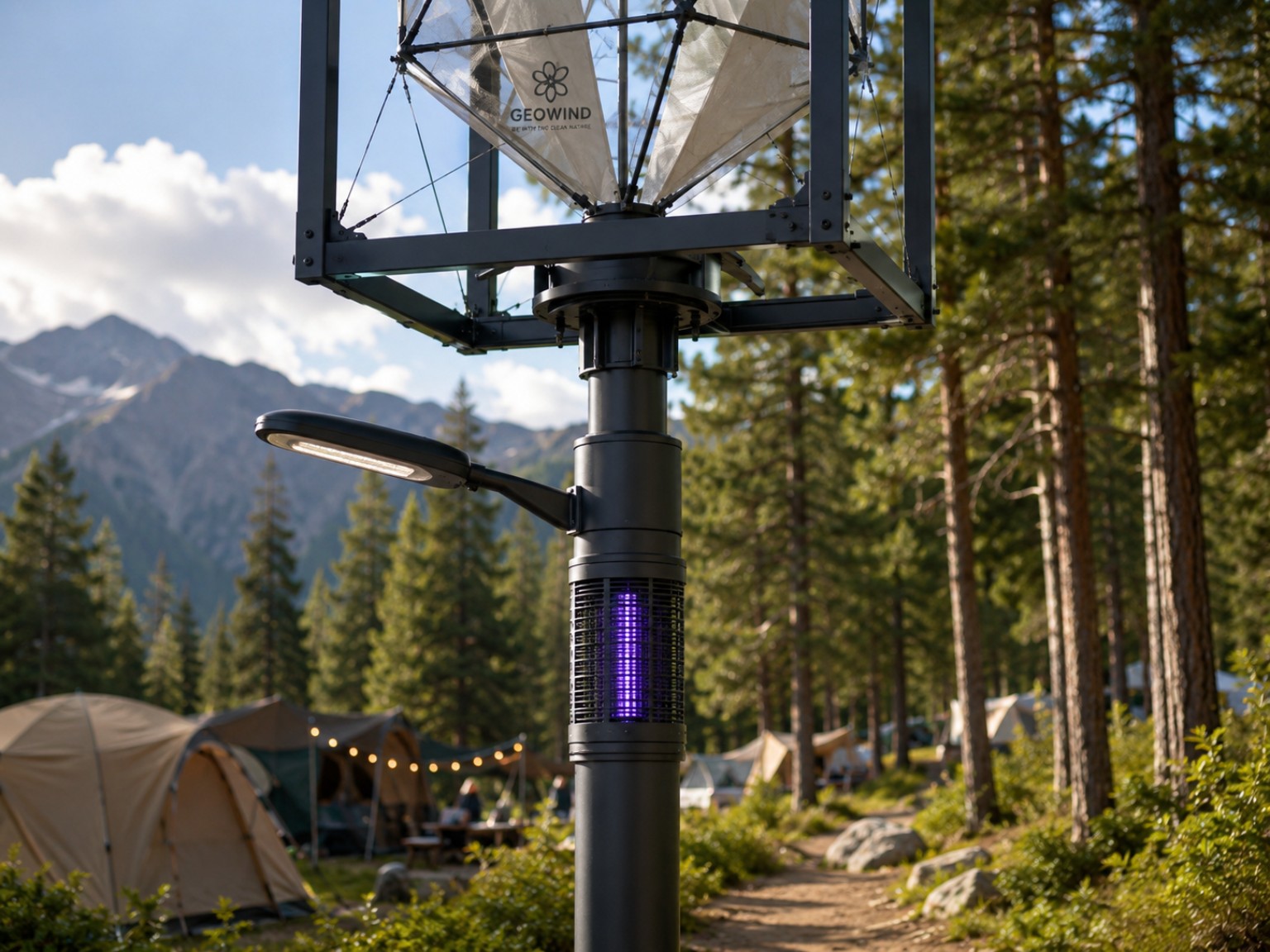
A separate lamp concept mounted on the pole. UV or other light is not established to repel all insects; test effectiveness, ecological impact and additional power on site.
Optional equipment concepts · excluded from the base 60 cm specification
CEO Sang Wook Han (Han Sang-wook) developed the hybrid landscape lighting concept to make wind visible as moving sculpture and turn stored energy into a shared nighttime experience.
The provided portrait is an illustration of the CEO, not a photographic portrait.Every site has different walking patterns, ambient brightness and surroundings. Spacing and lighting should be planned accordingly.
Nighttime scenery along a continuous walking route
A walking space shaped by water and light
A sculptural focal point for shared spaces
Installation tailored to the facility and its context
Solar can recharge the battery by day, while electricity actually generated by wind can offset LED use at night. If wind power is below LED demand, the battery drains more slowly; any surplus may charge it. A 1.8 m/s rotor start does not establish useful charging power.
12.8 V × 30 Ah
80% of nominal
Without dimming
Day: solar charges the battery → night: the LED and wind generation can run together → next day: solar replenishes what was used. Rotation alone does not tell us the actual charging power.
Solar rating: 100 W; battery: 384 Wh (80% assumed usable). Enter the assumed wind power delivered while the LED is on. Only wind hours that overlap the lighting hours are counted.
For example, a 50 W LED running for six hours uses 300 Wh. If wind delivers an average 10 W during those hours, 60 Wh comes from wind and the battery supplies about 240 Wh overnight. If solar replenishes 225 Wh the following day, the simplified daily deficit is only 15 Wh. During rain and still air, neither source helps; 307 Wh usable battery energy lasts about one full-power night. Three to five nights needs dimming or measured recharging.
Illustrative continuous runtime starts with a full battery, assumes constant wind power for the entered overlap hours and then no wind. Timer limits, system losses and the battery storage cap need separate review.
| Conditions | Daytime solar input | Night wind / LED use | Daily battery balance |
|---|---|---|---|
| Sunny · no night wind3 equivalent sun hours, 75% factor | 225 Wh | 0 Wh / 300 Wh | −75 Wh |
| Sunny · 10 W night windWind for six LED hours | 225 Wh | 60 Wh / 300 Wh | −15 Wh |
| Sunny · 15 W night windWind for six LED hours | 225 Wh | 90 Wh / 300 Wh | +15 Wh (curtailed if battery is full) |
| Rain · 15 W night windNo sun; 50 W LED for six hours | 0 Wh | 90 Wh / 300 Wh | −210 Wh |
| Rain · no wind · dimmedNo sun; 10 W LED for six hours | 0 Wh | 0 Wh / 60 Wh | −60 Wh |
The assumed 10 W wind supply and 75% solar performance factor are illustrations, not measurements. Rotor movement at 1.8 m/s is not a guaranteed charging rate. Battery capacity limits, charging controls, idle draw, shade, season, temperature, aging and CCTV or other loads must be checked in the field. Small-wind guide and sources ↗
Spacing of 8–12 m on one side of the path is an initial concept. Confirm sunlight, turbulence, foundations, light distribution and any CCTV or insect-related accessory loads before final specification.
CONTACT · CREATIVE & WINGS
Tell us the location and expected quantity so we can discuss an approach suited to the site.