HYBRID · SOLAR + WIND
Wind and sun
light the path.
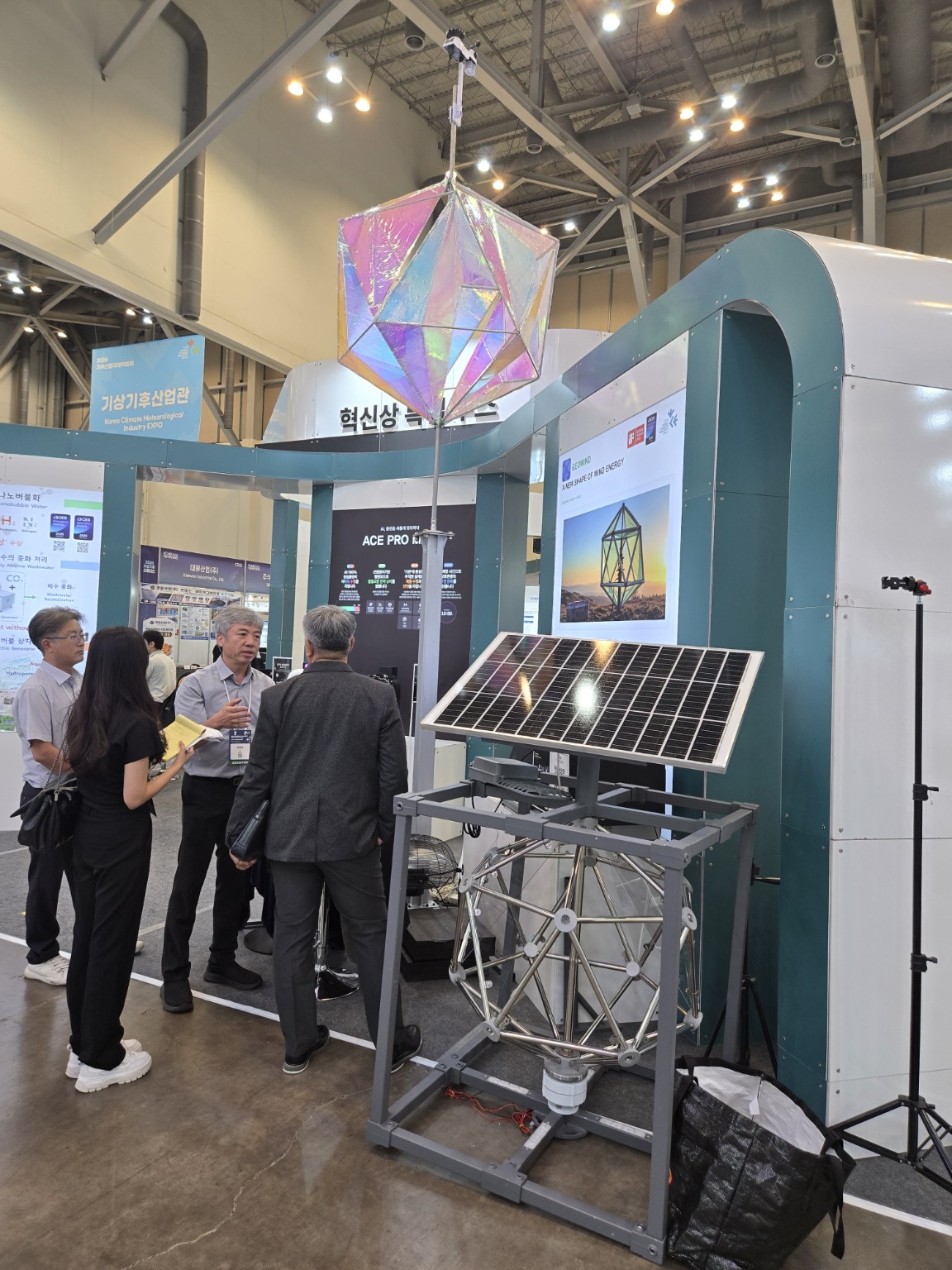
The hybrid landscape light charges its battery with solar power during the day. At night, real wind generation can offset LED consumption and extend runtime. Explore the proposed 60 cm model and its weather-dependent estimates.
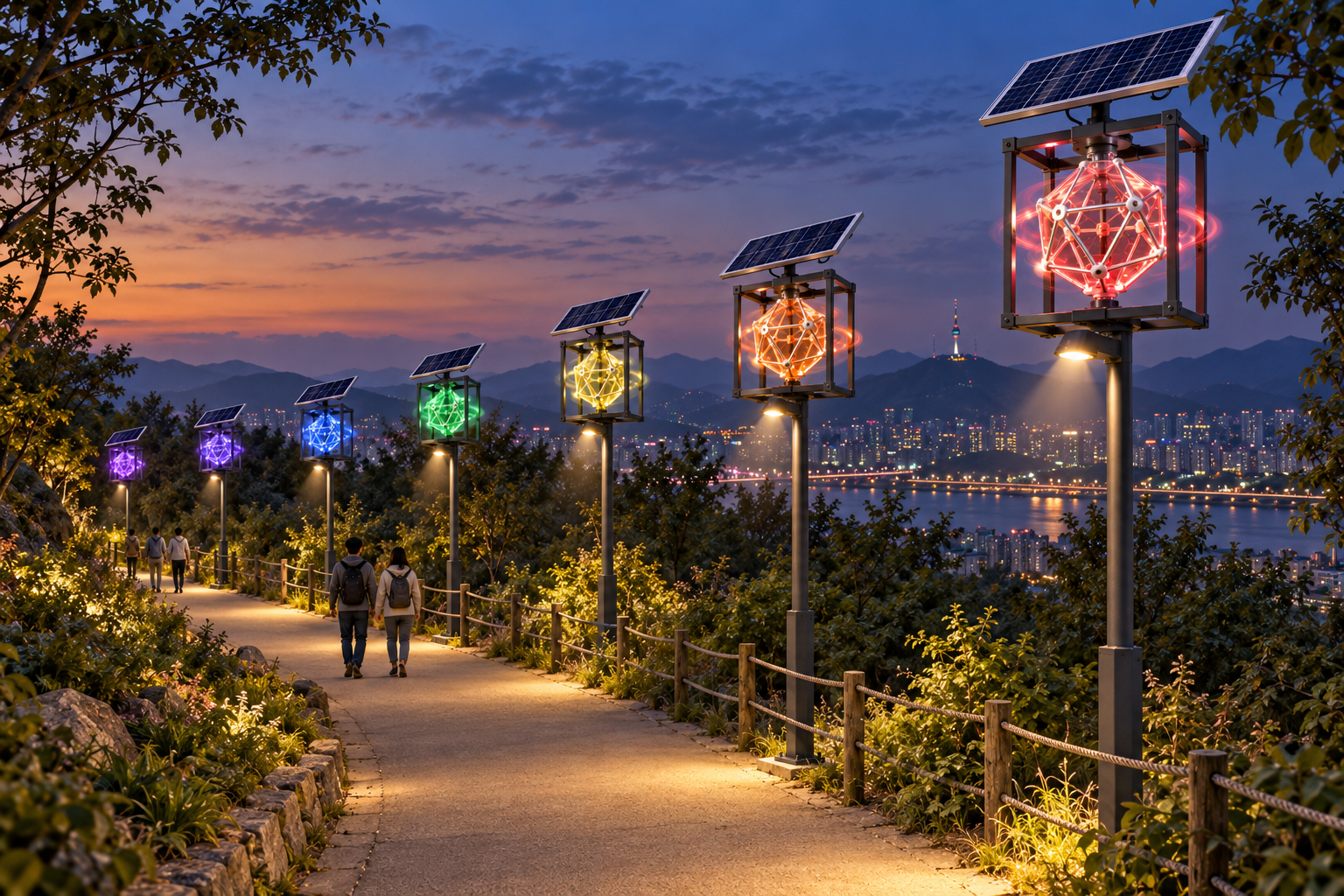 Path installation concept · not a completed site
Move the wind. Watch the light change.
Move the slider to explore rotor speed, illustrative wind output and LED brightness. In battery-assist mode, wind reduces battery draw while the battery keeps the lamp lit.
Rotor starts at 1.8 m/s · meaningful charging needs measured validation
LED brightnessWind-only demonstration: output directly controls LED brightness.
Rotor turning
- Illustrative wind output
- 25.5 W
- LED brightness
- 51%
- Battery contribution
- 0.0 W
- Surplus for charging
- 0.0 W
Educational simulation only. No measured power curve or rated wind speed was supplied for the 60 cm unit, so the curve arbitrarily assumes 50 W at 10 m/s (200 W is the proposed generator rating). LED load is 50 W; battery-assist mode assumes a charged battery. Conversion and charging losses are excluded. A rotor starting at 1.8 m/s does not prove useful battery charging at that speed. Wind speed and power: U.S. Department of Energy ↗
INTERACTIVE / WIND × ROTOR SIZE
See how wind and rotor size change the power curve
Move the wind slider and select a rotor diameter. An animated 60-second trace shows synthetic wind and illustrative wind output, inspired by the monitoring display in the supplied photo.
The slider sets the baseline wind. Playback adds a small simulated gust to animate the trace.
Proposed 35 · 45 · 60 · 80 cm sizes · detailed specifications only for 60 cm
SIMULATED / NOT MEASURED
Rotation assumed · charging needs measurement
Compare four sizes at the same wind speed
- 35 cm
- 45 cm
- 60 cm
- 80 cm
Educational calculation only. As in the existing simulator, the 60 cm rotor is arbitrarily assumed to produce 50 W at 10 m/s, with an assumed 0 W below 1.8 m/s applied to all four sizes. For other sizes, rotor height is assumed to scale with diameter, so intercepted area scales with diameter squared; a 200 W calculation cap is used for all four sizes. The wind trace is generated, not recorded. Rotor start speed does not establish charging start speed, and these values are not measured output, battery charging, or guaranteed product performance. Wind speed and power: U.S. Department of Energy ↗
Start with Hybrid landscape lighting.
Explore the actual prototype photograph, 35/45/60/80 cm rotor options, component details and conditional battery runtime.
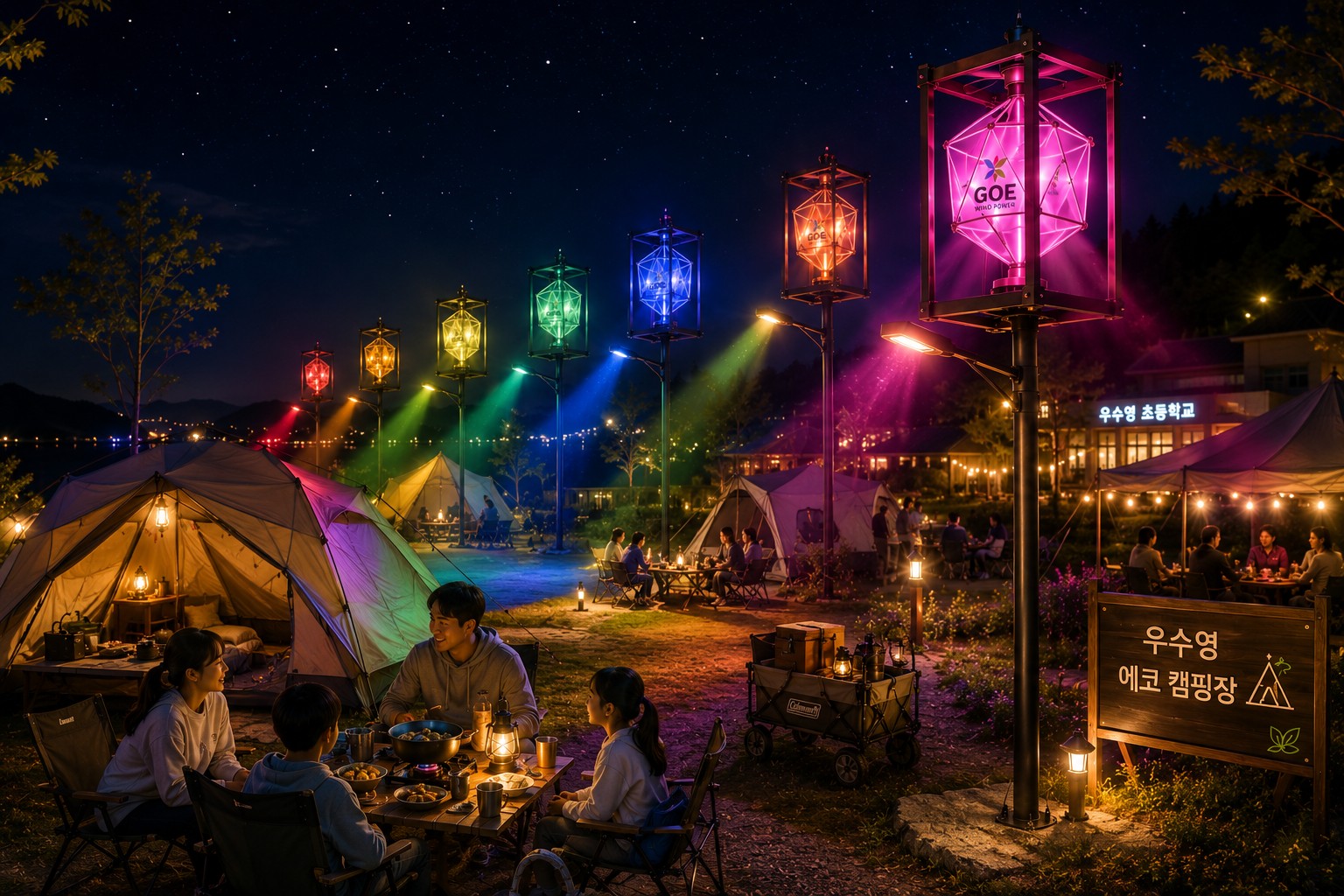
Hybrid landscape light
Explore the 60 cm solar, wind, battery and LED specifications, then adjust sun and wind assumptions to see expected runtime.
View landscape light ↗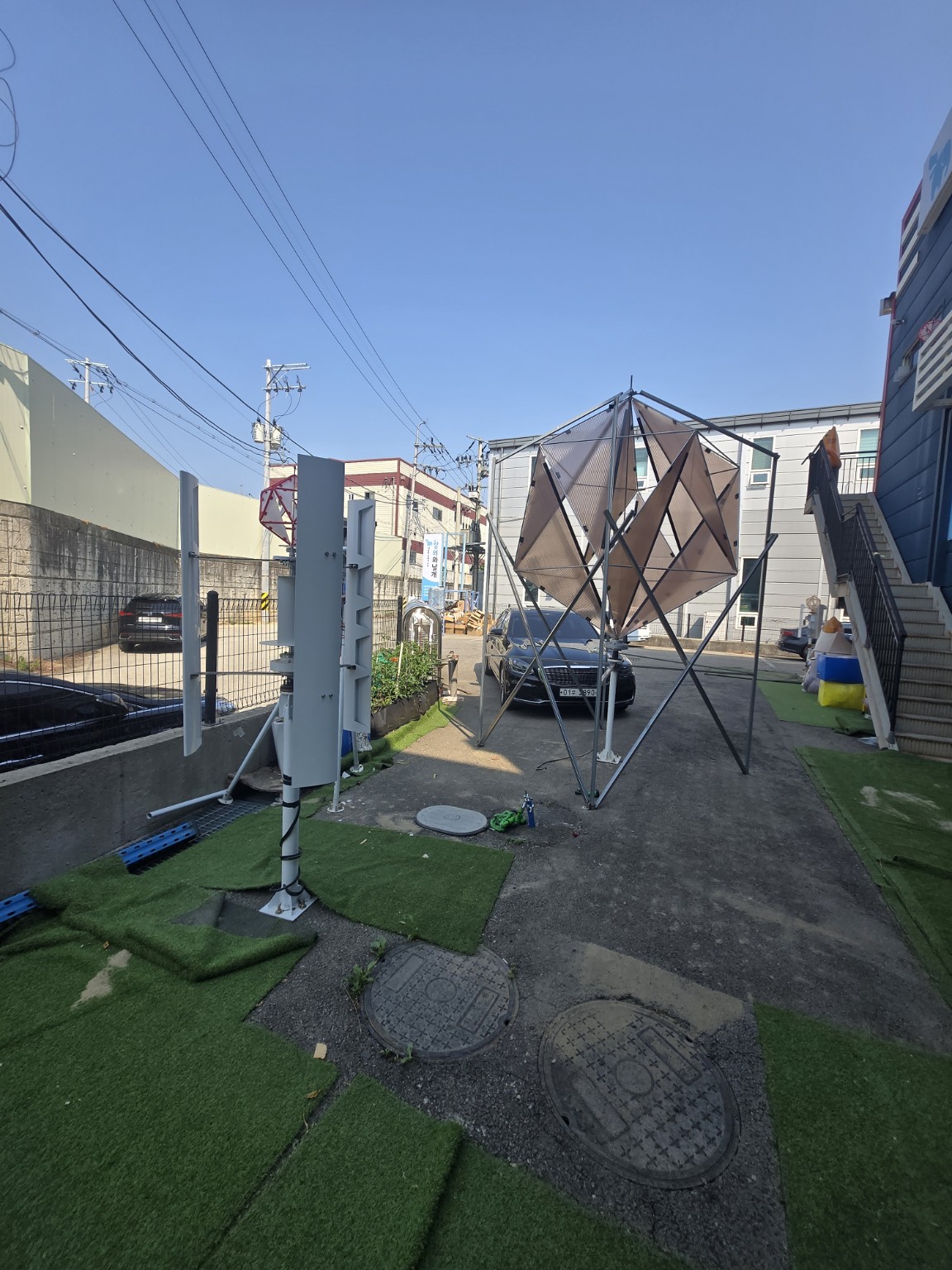
GeoWind wind turbine
The actual built structure, its rotating parts, planned blade-size tests and the relationship between wind speed and power.
View wind turbine ↗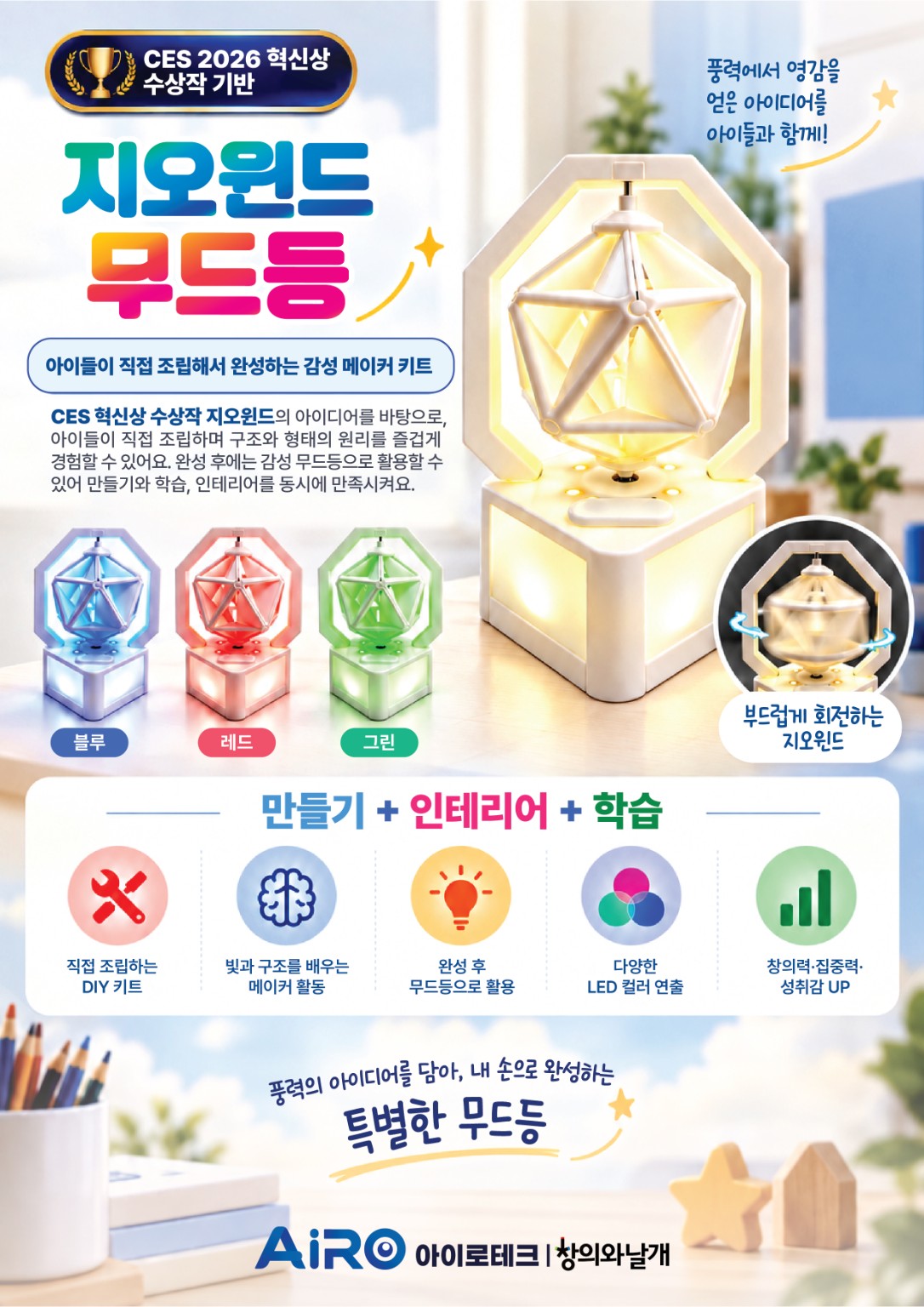
GeoWind DIY mood light
A maker kit to assemble, learn geometric structure and use as a desk light.
View mood light ↗Where are visitors connecting from?
Approximate connection locations of visitors exploring GeoWind and the hybrid landscape light.
Top connection countries
- 01South Korea75
- 02United States47
- 03France2
- 04Ireland1
- 05Canada1
These are unique browsers per day, so a browser visiting on different dates appears more than once in the total. Locations are inferred from connection IPs and do not establish nationality, residence or purchase intent. Dates use Korea Standard Time (KST).
Performance needs numbers;
numbers need evidence.
Wind output depends strongly on wind speed and site conditions. Our examples separate theoretical calculations from measured product results.
- Theoretical wind energy by speedAt the same swept area, twice the wind speed means eight times the theoretical power in the wind.
- On-site test planMeasure output, start-up behavior, vibration and noise across blade sizes.
- Hybrid lighting studyCompare daily solar and wind generation with battery capacity and LED demand.
Verified product-specific generation figures and certified efficiency data are not published here. Calculations are examples, not performance guarantees.
CONTACT · CREATIVE & WINGS
Let's discuss products
and site conditions.
Ask about wind prototypes, landscape-light installations or the DIY mood-light kit for education.